The Cape Coast Castle visit is — and should be — one of the heaviest hours of any Ghana trip. It is not a "tourist site" in the easy sense. Visitors leave shaken. That's the point.
This guide is about preparing properly: when to go, which tour to choose, what to do before and after.
What it is
Cape Coast Castle was built by the Swedes in 1653, expanded by the Danes, and operated by the British as the headquarters of the trans-Atlantic slave trade until the trade was abolished in 1807. Hundreds of thousands of Africans passed through its dungeons before being loaded onto ships through the Door of No Return.
The castle is now a UNESCO World Heritage Site and houses the Cape Coast Castle Museum. It's run by the Ghana Museums and Monuments Board.
Timing the visit
Best time of day: first tour of the morning, 9:00 or 9:30. The dungeons are slightly cooler, the museum is empty, the staff aren't tired.
Best season: November to March. The castle is open year-round but the coastal humidity is heaviest May to September.
Best day of week: weekdays. Weekends bring local school groups and large diaspora tours — both meaningful in their own right but not what you want for your first encounter.
Booking and entry
You don't need to book ahead for individual or small-group visits. Larger groups should email the museum the week before.
Entrance fees are charged separately for the museum and the guided tour. The guided tour is non-negotiable — it's how you access the dungeons and the Door of No Return — and worth every cedi.
Pricing changes year to year; expect roughly GHS 60-80 per person for the combined ticket as of 2026.
What to expect on the tour
The guided tour follows a deliberate emotional arc:
- The Governor's quarters and Anglican chapel above the dungeons — a deliberate juxtaposition of the trade's everyday cruelty.
- The female dungeons — small, dark, designed to hold dozens.
- The male dungeons — larger but more crowded; the air sits differently.
- The Door of No Return.
- Back through the Door — a recent reverse passage commemorating Year of Return.
- The museum, free to explore at your own pace afterwards.
The tour is in English. Guides vary in tone — some are scholarly, some are passionate orators. Both modes work.
What to do before
Reading a single book changes the visit. We suggest:
- The Door of No Return by William St Clair — narrative non-fiction about the castle itself
- Homegoing by Yaa Gyasi — a novel that begins at the castle and follows seven generations
- The Cape Coast Castle Museum's own short reading list, available at the front desk
If you have only a few hours: read the museum's published walking pamphlet on the bus over from Accra.
What to do after
The instinct after the tour is to want quiet. Most travellers we know want to walk, not eat.
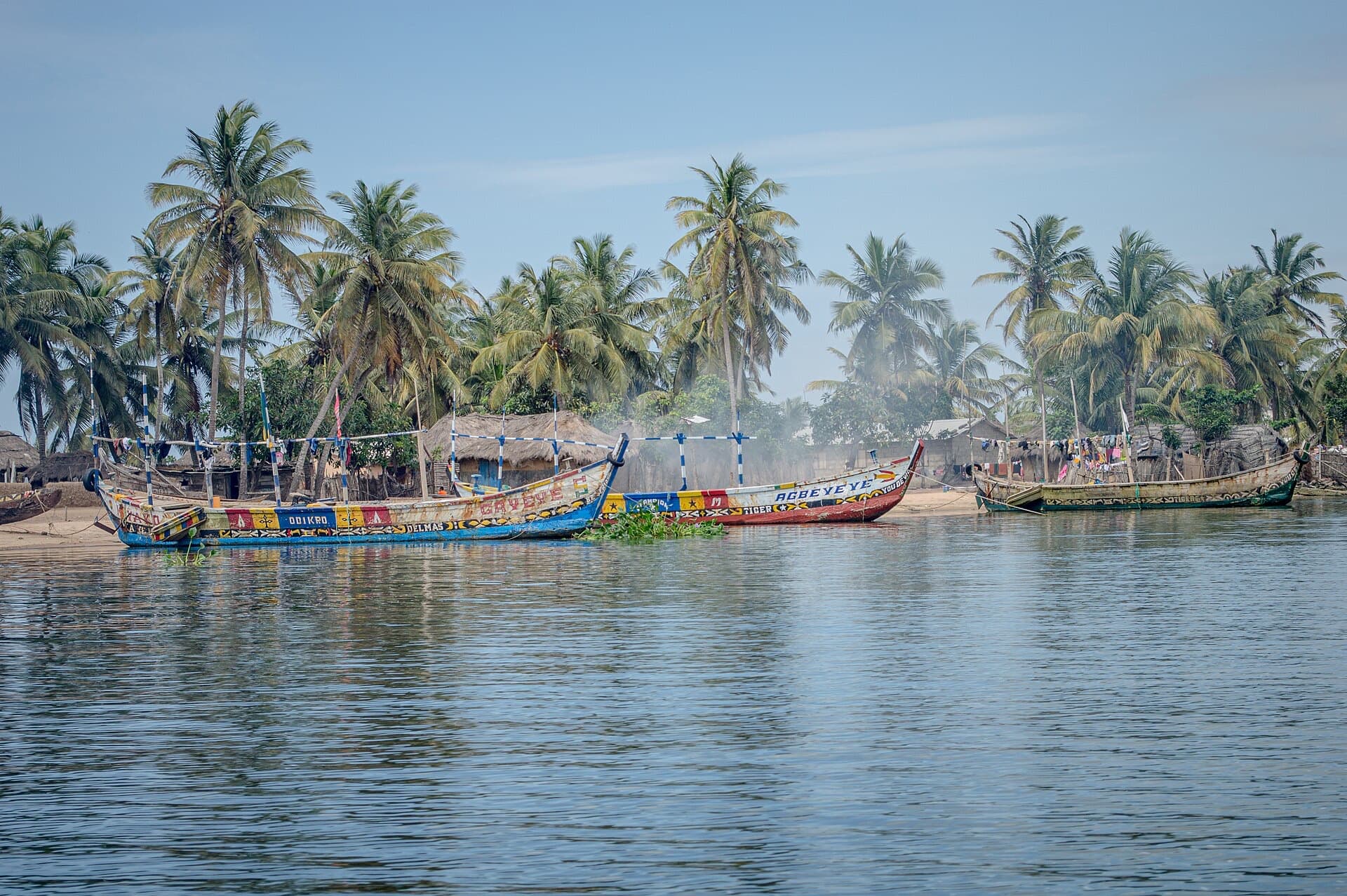
Recommended sequence: walk down to the seafront below the castle. Sit for 15-30 minutes. The fishing boats coming in are a strange comfort. Then walk back up to the Castle Restaurant on the patio for a slow late lunch.
For the rest of the day, we'd avoid scheduling anything intense. Save Kakum canopy walk and Elmina Castle for the next day.
Combining with other Cape Coast stops
The Central Region rewards two full days minimum. Here's the sequence we'd suggest:
Day 1 — Cape Coast
- 09:00 · Cape Coast Castle tour — Two hours. Allow space afterwards for reflection.
- 12:30 · Walk along the seafront — Decompress. Watch the fishing boats.
- 13:30 · Late lunch at Castle Restaurant — Sea-facing patio. Banku and tilapia.
- 16:00 · Free time — Rest, journal, or wander Cape Coast town.
- 18:30 · Sunset at Elmina exterior — Skip the interior tour today; just the silhouette.
Day 2 — Kakum & Elmina
- 09:00 · Kakum canopy walkway — Seven suspension bridges 40m above the rainforest.
- 12:00 · Lunch at Hans Cottage Botel — Restaurant overlooks a pond of resident crocodiles.
- 14:30 · Elmina Castle tour — Older than Cape Coast (1482). Different but complementary story.
- 17:00 · Elmina harbour at golden hour — Photography time as the fishermen unload the morning catch.
A note for diaspora travellers
The Year of Return (2019) and the ongoing Beyond the Return programming have transformed Cape Coast Castle from a museum into a pilgrimage site for African-descended travellers.
The staff understand this. Many tours include space — usually informal — for diaspora visitors to share where they're returning from. We've seen guides hold extended silences in the dungeons that felt entirely correct.
If you're travelling as part of a diaspora group, ask the museum about specific Emancipation Day or PANAFEST programming. It's typically more elaborate than the daily schedule.
The hardest piece of advice
Don't put anything on after the tour for at least three hours. The instinct to "use the day well" is the wrong instinct here.
Build a Cape Coast trip with the AI planner
It'll sequence the castle visit early, with proper space afterwards.
Frequently asked
How long does the Cape Coast Castle tour take?
Plan two hours. The guided tour itself runs ~75-90 minutes; the museum and reflection time add another 30-45 minutes.
Should I visit Cape Coast Castle or Elmina Castle?
If you only have one — Cape Coast. It's the more historically central site for the trans-Atlantic slave trade and the museum is better curated. Visit both if you have a second day.
Is photography allowed inside?
Yes in most areas, with respect. Photography is discouraged inside the dungeons; some tour guides will ask you to put cameras away there entirely.